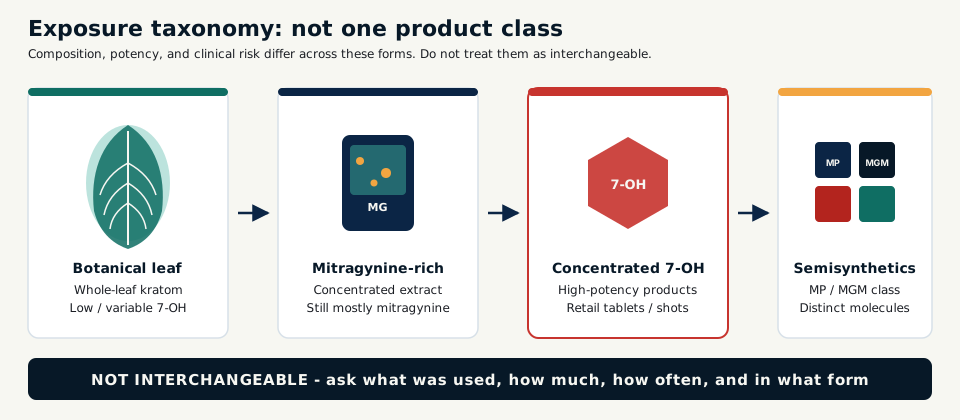
Core compounds
- Mitragynine — major botanical alkaloid; precursor to several active metabolites
- 7-hydroxymitragynine (7-OH) — trace botanical alkaloid, active mitragynine metabolite, and the driver of high-concentration retail products
- Mitragynine pseudoindoxyl (MP) — potent rearrangement product; may be ingested directly or form downstream from 7-OH
- MGM-15 / MGM-16 and related analogues — semisynthetic/named compounds appearing in enforcement and product analyses
Market analyses have found high measured 7-OH inconsistent with authentic leaf, frequent label discrepancies, and evidence of semisynthetic origin in many 7-OH-labeled products.
Metabolic map (executive)
Mitragynine can form 7-OH (notably via CYP3A4 pathways supported by interaction data). Downstream chemistry and metabolism can involve MP and other oxidation/demethylation products. “Detected in urine” is not the same as “primarily excreted unchanged,” and a plasma half-life is not a clinical detection window or a buprenorphine clock.
Direct purified high-dose human PK for commercial 7-OH remains unknown. Botanical tea kinetics do not license arithmetic for smoke-shop tablets.
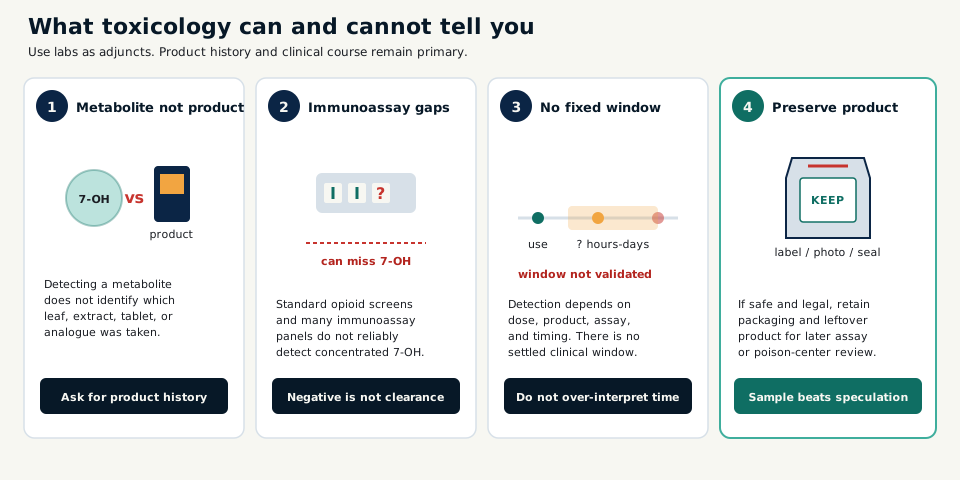
What testing can and cannot do
- Standard opiate immunoassays often do not detect 7-OH or mitragynine
- Targeted mass spectrometry (LC-MS/MS or LC-HRMS) is required for meaningful biologic confirmation
- Detection of MP does not by itself prove direct MP ingestion versus downstream formation
- Product testing (when available) beats label claims for characterizing exposure
Full compound glossary, enzyme assignments, and detection notes:
Appendix A,
combined chemistry reference,
pharmacology page, and the
full resource.
Clinicians · Pharmacology · Evidence · Legal tracker · Downloads